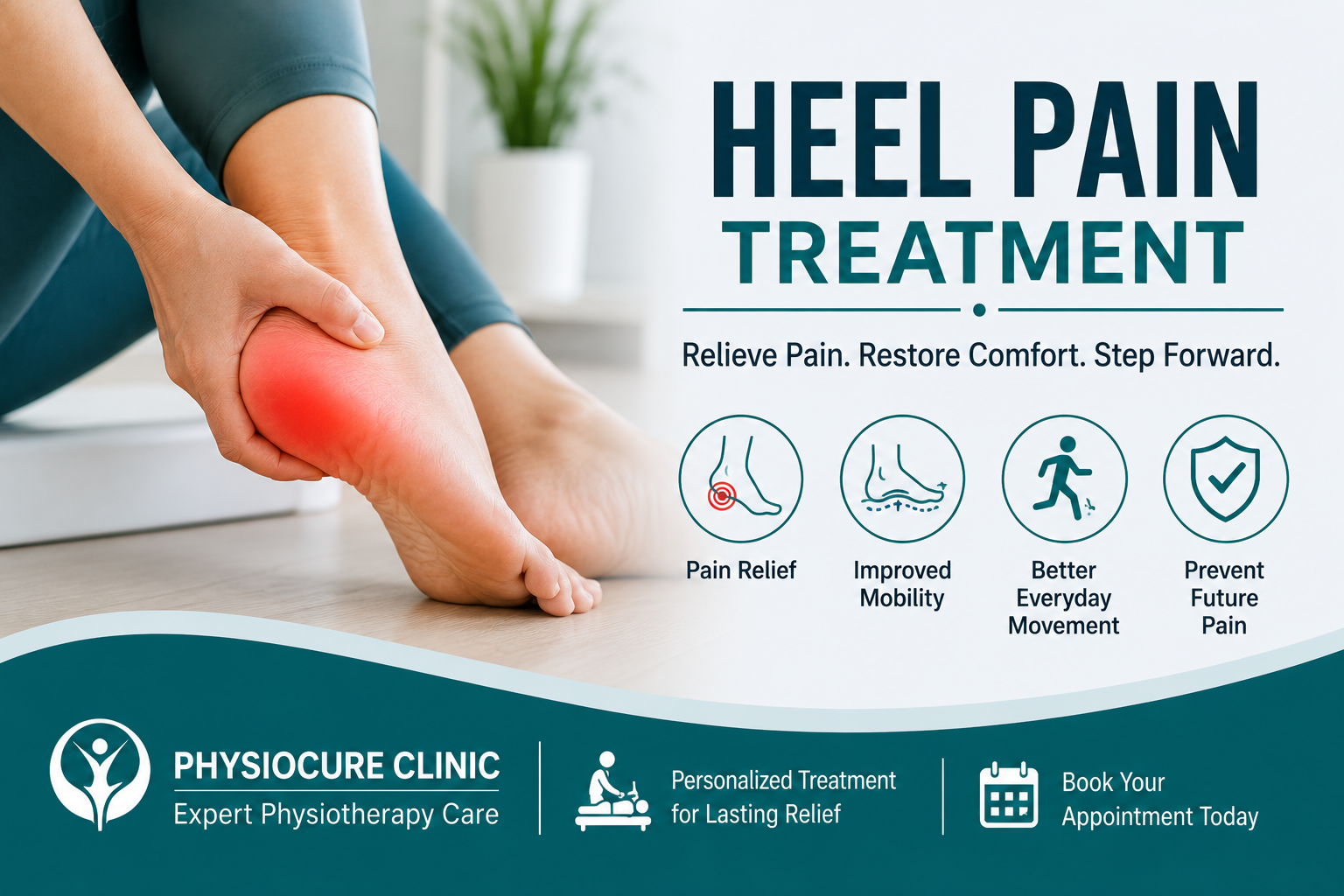
Heel Pain Treatment (Plantar Fasciitis) – Symptoms, Causes, Physiotherapy & Exercises
Learn how physiotherapy effectively treats heel pain and plantar fasciitis, helping you walk comfortably and return to your daily activities without pain.
What is Heel Pain?
Heel pain is one of the most common foot problems affecting people of all ages. The most frequent cause is Plantar Fasciitis, where the thick band of tissue supporting the arch of the foot becomes inflamed. Heel pain is usually worse during the first few steps in the morning or after prolonged sitting.
Early physiotherapy can reduce inflammation, improve flexibility, strengthen the foot muscles, and prevent long-term complications.
Common Symptoms
- Sharp pain under the heel
- Pain during the first steps in the morning
- Pain after prolonged standing
- Difficulty walking comfortably
- Tenderness under the heel
- Tight calf muscles
- Foot stiffness
- Pain after exercise
Common Causes
- Plantar Fasciitis
- Heel Spur
- Flat Feet
- High Foot Arch
- Improper Footwear
- Excess Body Weight
- Running or Sports Activities
- Standing for Long Hours
- Tight Achilles Tendon
- Poor Foot Mechanics
Risk Factors
- People above 40 years
- Teachers
- Nurses
- Factory Workers
- Athletes and Runners
- Overweight Individuals
- People Wearing Unsupportive Footwear
How Physiotherapy Helps
At PhysioCure Clinic, we provide individualized heel pain rehabilitation programs designed to relieve pain and restore normal walking.
- Detailed Foot Assessment
- Pain Relief Therapy
- Ultrasound Therapy
- Manual Therapy
- Soft Tissue Release
- Plantar Fascia Stretching
- Achilles Tendon Stretching
- Foot Strengthening Exercises
- Gait Training
- Footwear Advice
Recommended Home Exercises
- Calf Stretch
- Plantar Fascia Stretch
- Towel Stretch
- Toe Curl Exercises
- Marble Pick-Up Exercise
- Heel Raise Exercise
- Ankle Mobility Exercises
- Foot Arch Strengthening
Tips to Prevent Heel Pain
- Wear comfortable supportive footwear.
- Avoid walking barefoot on hard floors.
- Stretch your calf muscles daily.
- Maintain a healthy body weight.
- Avoid standing continuously for long periods.
- Replace worn-out shoes regularly.
- Warm up before sports activities.
- Consult a physiotherapist if pain persists.
🛒 Recommended Heal Pain Care Products
We have selected a few products that may be useful for Heal support, gentle home exercise, strengthening and everyday comfort. Please consult a qualified physiotherapist before using any exercise or support product, particularly if you have significant pain, swelling, instability or difficulty walking.
Affiliate Disclosure: As an Amazon Associate I earn from qualifying purchases.
🛒 View Recommended Heal Pain Products on AmazonWhy Choose PhysioCure Clinic?
- 23+ Years of Physiotherapy Experience
- Evidence-Based Heel Pain Treatment
- Personalized Rehabilitation Programme
- Modern Electrotherapy Equipment
- Exercise-Based Recovery
- Friendly Patient Care
- Conveniently Located near Padi, Mogappair & JJ Nagar
Frequently Asked Questions
What is the most common cause of heel pain?
The most common cause is Plantar Fasciitis, which involves inflammation of the plantar fascia supporting the foot arch.
Can physiotherapy cure heel pain?
Yes. Most heel pain cases improve significantly with physiotherapy, stretching exercises, and proper footwear.
How long does recovery take?
Most patients notice improvement within 4 to 8 weeks, depending on the severity of the condition and adherence to exercises.
Should I stop walking if I have heel pain?
Not necessarily. Your physiotherapist will advise appropriate activity modification while continuing safe exercises to promote healing.
Book Your Heel Pain Consultation
Don't ignore persistent heel pain. Early physiotherapy can help relieve pain, improve walking, and prevent long-term foot problems.
Contact Us